
High Stability Crowd Control Barriers from Wire Mesh Company
Securing a perimeter requires more than just a physical barrier; it demands a balance of structural stability, rapid deployment, and long-term environmental resilience. For project managers overseeing construction sites or municipal events, the choice of crowd control systems often determines the efficiency of site logistics and the safety of the public. Our high-stability barriers are engineered to address these specific operational pressures, providing a robust solution that resists weathering while remaining easy to transport.
Designed for versatility, these barriers are not merely fences but strategic assets for security and flow management. By utilizing reinforced tubing and double-interlocking hinge points, we ensure that once deployed, the line remains intact even under significant pressure. Whether you are managing a high-traffic public event or securing a restricted industrial zone, understanding the technical specifications of the tubing and finish is critical for optimizing the lifecycle of your investment.

Engineering Stability Through Double-Interlocking Hinge Points and Reinforced Tubing
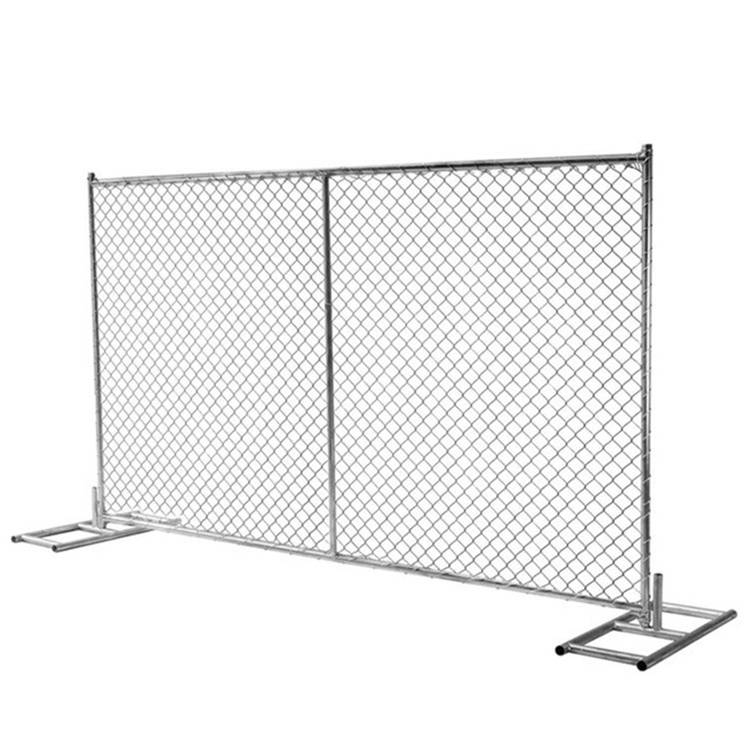
The structural integrity of a temporary barrier depends heavily on its connection points. Our barriers feature double interlocking hinge points, a design choice that prevents individual sections from being easily displaced or separated. This mechanism ensures that the entire line of fencing acts as a single, cohesive unit, which is essential for maintaining secure perimeters in crowded environments like airports or tourism parks.
Material selection is equally critical. Using a combination of outer tubes (ranging from 32mm to 38mm) and internal support tubes, we achieve a high strength-to-weight ratio. The primary bottom tube, typically Ø35 x 1.2 mm, provides the necessary ballast and rigidity to prevent tipping. This engineering approach allows for a product that is strong enough to withstand crowd pressure but lightweight enough for rapid installation by a small crew.
Furthermore, the integration of removable feet is a strategic advantage for logistics. During stacking and storage, these feet can be detached, significantly reducing the volume required in shipping containers. For example, a 1x40HQ container can accommodate up to 690 pieces of the HML-TB1910 model, optimizing freight costs for large-scale municipal projects.

Weather Resistance and Finish Options for Diverse Environmental Exposure
Temporary barriers are frequently exposed to harsh outdoor elements, from coastal salinity to industrial pollutants. To combat corrosion, we offer a variety of professional finishes. Hot-dip galvanization is the industry standard for maximum longevity, creating a thick zinc layer that protects the underlying steel from rust. This is particularly vital for water conservancy projects or long-term construction site security where barriers may remain in place for several months.
For projects requiring a specific aesthetic or additional protection, powder coating and zinc plating are available. Powder coating not only provides a color-coded identification system for different security zones but also adds a durable polymer layer that resists scratching and impact. The choice of finish directly impacts the maintenance cycle of the barrier, reducing the need for frequent replacements in high-humidity regions.
Our commitment to quality is backed by international certifications. The manufacturing process adheres to ISO-9001 for quality management and ISO-14001 for environmental management. This ensures that every barrier leaving the factory meets consistent technical standards, regardless of the order volume, providing peace of mind for international buyers in regions such as Canada, Australia, and Saudi Arabia.
Strategic Application Scenarios from Municipal Administration to Prison Security
The application of these metal barriers extends far beyond simple queue management. In municipal administration, they are used to redirect traffic and protect pedestrians during roadworks. In higher-security environments, such as prisons or airport restricted zones, the stability and interlocking nature of the barriers prevent unauthorized breaches, creating a reliable first line of defense before permanent fencing is installed.
Event organizers utilize these systems for crowd fencing and barricades to manage flow at major public gatherings. The ability to customize barrier sizes—such as 1.1×2.1m or 1.3×2.3m—allows organizers to tailor the perimeter to the specific layout of the venue. The spacing between tubes (available in 100mm to 200mm) is designed to prevent limbs or objects from becoming lodged while maintaining clear visibility for security personnel.
Additionally, in the construction sector, these barriers are indispensable for securing sites and protecting the public from hazardous areas. The quick-install nature of the interlocking system means a perimeter can be established in minutes, allowing the project to remain compliant with safety regulations without delaying operational timelines.
Technical Specification and Configuration Matrix
| Model/Feature | Tube Dimensions | Available Finishes | Primary Application |
|---|---|---|---|
| HML-TB1910 | Bottom Ø35x1.2mm | Hot-dip Galvanized | Public Events / Security |
| Outer Tube Options | 32mm / 36mm / 38mm | Powder Coated | Municipal Administration |
| Inner Tube Options | 12mm / 16mm / 25mm | Zinc Plated | Construction Sites |
| Standard Sizes | 1.1x2.1m to 1.3x2.3m | Customized | Airport / Prison Perimeters |
| Spacing Range | 100mm - 200mm | Industrial Grade | Crowd Control / Barricades |
Procurement Considerations for Large-Scale Security Infrastructure
When sourcing from a wire mesh company, procurement managers must look beyond the unit price and evaluate the Total Cost of Ownership (TCO). This includes considering the durability of the finish, the ease of installation, and the efficiency of shipping. A barrier that is slightly more expensive but offers superior galvanization will save costs over time by eliminating the need for rust treatment and premature replacement.
Customization capabilities are another key factor. OEM and ODM orders allow buyers to specify exact dimensions and tube thicknesses to meet local safety codes or specific project requirements. For instance, a project in a high-wind coastal area may require heavier bottom tubes for increased stability, while a temporary event in a city center may prioritize lightweight, powder-coated units for rapid deployment and removal.
Finally, verifying the manufacturer's certifications is non-negotiable. Adherence to OHSAS18001 ensures that the products are manufactured under safe conditions, which often reflects in the precision and quality of the final product. Suppliers who participate in international building materials exhibitions typically demonstrate a higher level of transparency and a better understanding of global market standards.
Evaluating Future Trends in Temporary Perimeter Security
The trend in temporary security is moving toward "modular adaptability." Future systems are integrating more removable components to further reduce the carbon footprint of transportation. We are seeing an increased demand for hybrid finishes that combine the corrosion resistance of galvanization with the visual branding of powder coating, catering to both functional security and corporate identity at major events.
Moreover, the integration of smarter deployment strategies is becoming common. By analyzing the specific pressure points of different event types—such as music festivals versus political rallies—manufacturers are optimizing the spacing and tube thickness of barriers to maximize safety. This data-driven approach to design ensures that the barrier provides the maximum possible resistance with the minimum amount of material waste.
As urban environments become more congested, the need for barriers that can be installed in extremely tight spaces without compromising stability is growing. The development of more compact interlocking mechanisms will allow for tighter turns and more complex perimeter shapes, providing security teams with greater flexibility in managing crowd dynamics in modern city centers.
Frequently Asked Questions Regarding Security Barriers
What is the primary advantage of double interlocking hinge points?
Double interlocking hinge points prevent the barriers from being separated or pushed apart by crowd pressure, ensuring the perimeter remains a continuous, stable line that is much harder to breach than single-hook systems.
Which finish is best for long-term outdoor use in coastal areas?
Hot-dip galvanization is highly recommended for coastal environments because it provides a thick, durable layer of zinc that protects the steel from salt-induced corrosion and oxidation.
Can the barriers be customized for specific height and length requirements?
Yes, we support OEM and ODM orders with a wide range of sizes, including 1.1×2.1m, 1.2×2.5m, and 1.3×2.3m, to suit different security levels and site layouts.
How does the removable feet design benefit shipping?
Removable feet allow the barriers to be stacked more densely during transport. This significantly increases the number of units that can fit into a 40HQ container, reducing the per-unit shipping cost.
What certifications do your products carry for quality and safety?
Our manufacturing process is certified under ISO-9001 for quality management, ISO-14001 for environmental management, and OHSAS18001 for occupational health and safety.
Are these barriers suitable for high-security areas like prisons or airports?
Yes, due to their high stability, reinforced tubing, and interlocking mechanism, they are frequently used in airports, prisons, and other high-security municipal projects to control access effectively.
Technical References and Industry Standards
- ISO 9001:2015 Quality Management Systems Standards
- ASTM International Standards for Steel Galvanization
- OSHA Guidelines for Construction Site Perimeter Safety
- European Norms for Temporary Crowd Control Barriers
For professionals seeking a reliable partner in perimeter security, selecting a manufacturer with integrated production and installation capabilities is key. If you require a tailored solution for your next project, please provide your specifications, and our technical team will assist you in selecting the optimal configuration.
Explore Related Security Solutions