
Industrial Crowd Control Barriers and Price of Expanded Metal
Securing high-traffic areas and construction sites requires more than just a physical barrier; it demands a balance of structural stability, rapid deployment, and weather resistance. For procurement managers and site engineers, the objective is to find crowd control solutions that minimize installation time while maximizing safety. Whether managing a major public event or securing a private industrial zone, the choice of materials and interlocking mechanisms directly impacts the operational efficiency of the perimeter security.
Professional crowd control safety barriers, such as the HML-TB1910 series, are engineered to meet these rigorous demands. By utilizing hot-dip galvanized finishes and reinforced tubular steel, these systems provide a robust defense against environmental corrosion and physical impact. Understanding the technical specifications—from tube diameter to interlocking hinge points—allows buyers to optimize their investment based on the specific density and security level of their intended application.

Engineering Standards for High-Stability Crowd Control Barriers
The effectiveness of a safety barrier depends largely on its structural geometry and material integrity. High-stability barriers are typically constructed from precision-welded steel tubes, featuring a combination of larger outer tubes for primary support and smaller inner tubes to provide the necessary rigidity. For instance, a configuration using a 35mm bottom tube ensures a low center of gravity, which is critical for preventing the barrier from tipping under pressure from large crowds.
Beyond the dimensions, the finish plays a pivotal role in the product's lifecycle. Hot-dip galvanization is the industry standard for outdoor applications because it creates a metallurgical bond between the zinc and the steel, providing far superior corrosion resistance compared to simple spray painting. This is essential for barriers used in municipal administration, airport perimeters, or coastal tourism parks where humidity and salt air can rapidly degrade untreated metal.
- Structural Rigidity: Use of double interlocking hinge points to ensure the line of barriers remains straight and stable.
- Installation Efficiency: Quick-connect mechanisms allow for rapid deployment by minimal staff.
- Versatility: Available in multiple heights (from 2.1m to 2.5m) to suit different security risk profiles.

Practical Application Scenarios and Deployment Logic
Selecting the right barrier requires matching the product specification to the operational environment. In high-density concert or sports event scenarios, the primary goal is "flow control." Here, barriers with a tighter spacing (e.g., 100mm to 150mm) are preferred to prevent individuals from slipping through the gaps while maintaining a clear visual line for security personnel.
Conversely, for construction sites or private industrial zones, the focus shifts toward "exclusion." In these cases, the emphasis is on the height of the barrier and the stability of the feet. Removable feet are a significant advantage for logistics; they allow barriers to be stacked tightly during transport and storage, reducing shipping costs and warehouse footprint, then quickly attached on-site for immediate security.
For municipal projects involving railway or highway maintenance, antiglare fences and sound barriers are often integrated with crowd control systems to ensure both worker safety and public protection. The ability to customize the outer tube diameter (32mm to 38mm) allows project managers to scale the strength of the barrier according to the expected physical load of the site.
Procurement Considerations for Metal Perimeter Systems
When evaluating the price of expanded metal and tubular barrier systems, buyers must look beyond the initial unit cost. The total cost of ownership (TCO) includes the frequency of replacement and the labor costs associated with installation. A cheaper, poorly galvanized barrier may rust within two seasons, whereas a certified ISO-9001 manufactured product with professional hot-dip galvanization can last for years with minimal maintenance.
Customization capabilities are also a key differentiator. Professional manufacturers offer OEM and ODM services, allowing buyers to specify exact dimensions, powder coating colors for branding, or specific tube thicknesses based on engineering requirements. For large-scale projects, such as prison or airport security, adherence to OHSAS18001 occupational health and safety standards during the manufacturing process ensures that the product is built to a consistent, verifiable quality.
Buyers should prioritize suppliers who integrate production, sales, and installation. This comprehensive approach reduces the risk of specification mismatches and ensures that the delivered products are perfectly compatible with the on-site terrain and the intended security layout.
Technical Specifications Comparison Matrix
| Model Specification | Primary Material/Finish | Installation Speed | Recommended Application |
|---|---|---|---|
| HML-TB1910 (Standard) | Hot-dip Galvanized | Very High | Public Events & Concerts |
| Heavy Duty (Ø38mm Tube) | Zinc / Powder Coated | High | Construction Site Security |
| Custom Height (2.5m) | Galvanized Steel | Medium | Airport/Prison Perimeters |
| Lightweight (Ø32mm Tube) | Powder Coating | Very High | Temporary Tourism Parks |
| Interlocking Series | Hot-dip Galvanized | High | Municipal Administration |
Quality Assurance in Metal Wire and Barrier Manufacturing
Reliability in security products is non-negotiable. The manufacturing process must involve rigorous inspection methods to ensure that welding points are seamless and that the galvanization layer is uniform across all surfaces. ISO-9001 quality management systems provide a framework for this consistency, ensuring that every batch of barriers meets the same structural tolerances.
Advanced process equipment allows for the precision bending and cutting of tubes, which is essential for the "double interlocking" feature. If the hinge points are off by even a few millimeters, the stability of the entire line is compromised, creating gaps that can be exploited or points of failure under pressure. Therefore, utilizing a factory with a strong technical force and innovative management is a prerequisite for high-stakes security procurement.
Future Trends in Urban Crowd Management Hardware
The trend in crowd control is moving toward "modular versatility." Future systems are integrating more removable components and adaptable configurations to allow a single set of hardware to serve multiple purposes—from a strict security line to a guided queue. Environmental sustainability is also becoming a priority, with a shift toward eco-friendly powder coatings and recyclable steel sources.
As smart cities evolve, there is an increasing demand for barriers that can integrate with surveillance technology or sensor-based crowd monitoring. While the core of the product remains the physical steel barrier, the ability to quickly adapt the layout based on real-time data will make modular, easy-to-install systems like the HML series even more valuable to urban planners and event organizers.
Frequently Asked Questions About Safety Barriers
What is the difference between hot-dip galvanizing and powder coating for barriers?
Hot-dip galvanizing involves submerging the steel in molten zinc, creating a thick, durable layer that protects against rust from the inside out, making it ideal for permanent outdoor use. Powder coating is a dry finishing process that provides a wider range of colors and a smooth finish, better suited for aesthetic requirements or shorter-term indoor use.
How do double interlocking hinge points improve stability?
Double interlocking hinges create a stronger physical connection between individual barrier units. This prevents the barriers from separating or pivoting independently when pushed, ensuring the entire line acts as a single, cohesive wall of defense.
Can these barriers be customized for specific event branding?
Yes, we welcome OEM and ODM orders. We can provide powder coating in specific colors to match corporate branding or adjust the dimensions and spacing of the tubes to meet particular security specifications.
Are removable feet better than fixed feet for shipping?
Removable feet are significantly more efficient for logistics. They allow the barriers to be stacked flat, which maximizes the number of units that can be loaded into a 40HQ container, thereby reducing the shipping cost per unit.
What certifications should I look for in a barrier manufacturer?
Look for ISO-9001 for quality management, ISO-14001 for environmental management, and OHSAS18001 for occupational health and safety. These certifications ensure the manufacturer follows international standards for product consistency and workplace safety.
Which tube diameter is best for high-pressure crowd control?
For high-pressure scenarios, an outer tube diameter of 38mm combined with a thicker wall (e.g., 1.2mm) is recommended. This provides maximum resistance to bending and increases the overall impact strength of the barrier.
Technical References and Industry Standards
- ISO 9001:2015 Quality Management Systems Standards
- ASTM International Standards for Steel Piping and Coating
- OSHA Guidelines for Construction Site Perimeter Security
- European Hot-Dip Galvanizing Technical Guides
If you are seeking a professional manufacturing partner for your next infrastructure or event project, our team is ready to provide technical consultation and customized quotes. Contact us today to ensure your site is secured with industry-leading metal barrier systems.
Related Technical Insights

High Stability Crowd Control Barriers from Wire Mesh Company

Reliable Expanded Metal Mesh Manufacturers for Hesco Barriers
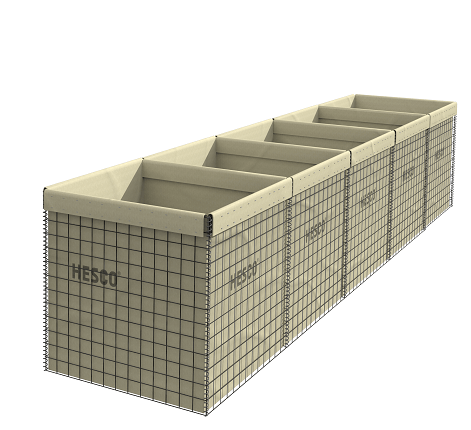
Factory for sale high quality hot dip galvanized hesco barrier wall