
Expanded mesh suppliers provide critical structural and security solutions by offering metal sheets that are slit and stretched into a diamond-shaped pattern. This manufacturing process creates a high-strength, permeable material without the waste associated with traditional punching or weaving, making it a preferred choice for industrial filtration, architectural cladding, and heavy-duty security fencing.
Selecting the right supplier is vital because the performance of the mesh depends heavily on the precision of the expansion ratio and the quality of the base material. From airport perimeter security to municipal infrastructure, the reliability of expanded metal impacts both the safety of the site and the long-term maintenance costs of the installation.
This guide analyzes the technical specifications, procurement criteria, and application standards for expanded metal products. Whether you are managing a large-scale construction project or seeking specialized security barriers, this article will help you evaluate supplier capabilities and select the optimal mesh configuration for your specific environmental needs.

1Understanding Expanded Metal Manufacturing

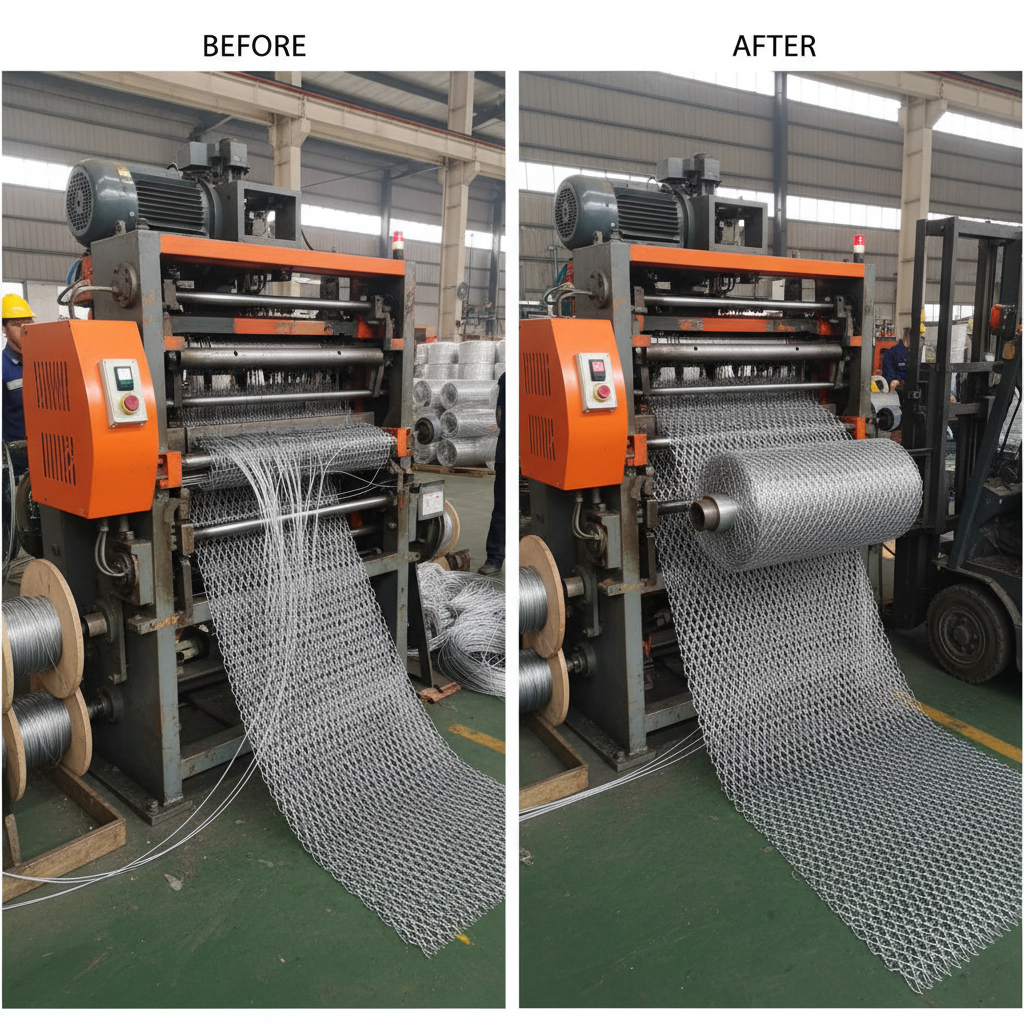
The production of expanded metal involves a unique cold-forming process where a metal sheet is precisely slit and then stretched. Unlike woven mesh, there are no welds or joints, which means the structural integrity of the material remains intact throughout the entire panel. This creates a monolithic structure that is exceptionally resistant to shear forces and impact.
Reliable expanded mesh suppliers utilize advanced CNC slitting machinery to ensure that the diamond shapes are uniform across the entire width of the sheet. This uniformity is essential for applications such as airport fencing, where any structural weakness could compromise the security perimeter.
From a material perspective, low carbon steel, galvanized steel, and aluminum are the most common substrates. The choice of material depends on the expected exposure to corrosive elements and the required tensile strength for the specific installation environment.
2Key Technical Specifications for Mesh Selection
When evaluating expanded mesh suppliers, procurement teams must focus on a set of core technical parameters. The most important of these is the SWD (Short Way of Diamond) and LWD (Long Way of Diamond), which define the geometry of the mesh openings. These dimensions dictate how much airflow, light, or debris can pass through the material.
Surface treatment is another deciding factor. Galvanization (Hot-dip or Electro) and PVC coating are essential for preventing oxidation in humid or coastal environments. For high-security applications, the combination of a galvanized core with a PVC outer layer provides both internal rust protection and external aesthetic flexibility.
Furthermore, the orientation of the mesh—whether the diamonds are aligned vertically or horizontally—can significantly alter the structural rigidity and the visual impact of the installation, which is a key consideration for architectural cladding.
3Industrial Applications and Use Case Analysis
Expanded metal is widely deployed in high-security environments. For instance, airport fencing requires a balance of visibility for surveillance and extreme impact resistance to prevent unauthorized access. By utilizing a V-shaped support at the top combined with razor wire, suppliers create a formidable perimeter that is cost-effective compared to solid walls.
In municipal administration and transport, expanded mesh is used for sound barriers and antiglare fences along highways and railways. These applications rely on the mesh's ability to diffuse sound waves and reduce light reflection without blocking essential ventilation for the surrounding area.
Beyond security, the material is invaluable in industrial filtration and machinery guarding. The ability to customize the mesh density allows engineers to create guards that protect operators from moving parts while allowing cooling air to circulate freely.
4Performance Metrics and Material Efficiency
One of the primary advantages of sourcing from specialized expanded mesh suppliers is the efficiency of the production process. Because the metal is stretched rather than punched, there is zero scrap material produced during the forming stage. This not only reduces the environmental footprint but also lowers the raw material cost per square meter.
When comparing performance, expanded metal typically outperforms woven options in terms of rigidity-to-weight ratio. The interconnected strands create a natural truss system that distributes loads more effectively across the panel, reducing the need for excessive support pillars in long-span installations.
expanded mesh suppliers Performance Metrics
The chart above demonstrates that high-quality expanded mesh offers superior impact stability and material efficiency. By optimizing the strand geometry, suppliers can achieve a strength profile that exceeds industry averages, particularly in high-stress environments like industrial barriers.
5Procurement Strategies for Global Sourcing
Sourcing expanded metal on a global scale requires a rigorous vetting process. Buyers should prioritize suppliers with ISO-9001 and ISO-14001 certifications, as these guarantee a consistent quality management system and a commitment to environmental standards. This is especially critical for projects involving government contracts or international safety codes.
OEM and ODM capabilities are also essential for complex projects. Whether you need custom panel dimensions or a specific PVC color to match municipal branding, a supplier with integrated production and installation capabilities can reduce the risk of onsite fitment issues.
Finally, consider the logistics of shipping large panels. Expanded mesh is relatively lightweight for its strength, but the diamond edges can be sharp; ensuring the supplier uses professional protective packaging is necessary to prevent damage during transit to countries like Australia, Canada, or Saudi Arabia.
6Environmental Constraints and Maintenance
While expanded metal is inherently durable, it is not immune to environmental degradation. In highly saline environments, such as coastal airport perimeters, standard galvanization may not be sufficient. In such cases, a dual-coating system—hot-dip galvanizing followed by a thick PVC layer—is recommended to prevent pitting corrosion.
Maintenance for expanded mesh systems is generally lower than for welded wire fences. Because there are no weld joints to fail or rust from the inside out, the primary maintenance task involves periodic inspections of the coating integrity and the tightness of the mounting bolts.
Operational risks include the "sharp edge" factor. For areas with high pedestrian traffic, suppliers often provide "flattened" expanded mesh, where the panels are passed through a cold-rolling mill to eliminate the burrs, ensuring safety without sacrificing the structural benefits.
7Comparing Expanded Mesh vs. Welded Wire
Choosing between expanded mesh and welded wire depends on the primary goal of the installation. Welded wire is often preferred for simple residential boundaries due to its clean look and lower cost. However, for industrial-grade security, expanded mesh is superior because it lacks the "weak points" found at every weld intersection.
From a cost-benefit perspective, expanded metal provides a higher ROI in terms of longevity. The absence of welds means there are fewer points where rust can start, and the monolithic structure is far more difficult to penetrate using manual cutting tools.
| Feature | Expanded Mesh | Welded Wire | Woven Wire |
|---|---|---|---|
| Structural Integrity | Monolithic / High | Point-based / Medium | Interlocked / Medium |
| Production Waste | Near Zero | Moderate | High |
| Impact Resistance | Excellent | Good | Fair |
| Corrosion Risk | Low (No welds) | High (at welds) | Medium |
| Customization | High (Ratio-based) | Medium (Grid-based) | High (Weave-based) |
| Security Level | Professional Grade | Standard Grade | Utility Grade |
In conclusion, for critical infrastructure like airports, prisons, and highways, the technical advantages of expanded metal—namely its impact resistance and material efficiency—make it the most logical choice for long-term perimeter protection.
Frequently Asked Questions
Conclusion
Selecting the right expanded mesh solutions requires a deep understanding of the balance between permeability, strength, and environmental resistance. By focusing on technical specifications like the expansion ratio and ensuring a robust surface treatment, project managers can implement security and architectural systems that are both durable and cost-effective.
For procurement teams evaluating high-performance barriers and metal mesh solutions, reviewing detailed product specifications is the first step toward a successful installation. Professional product information and customizable options can be explored at www.chbarrier.com to ensure your project meets all safety and industry standards.