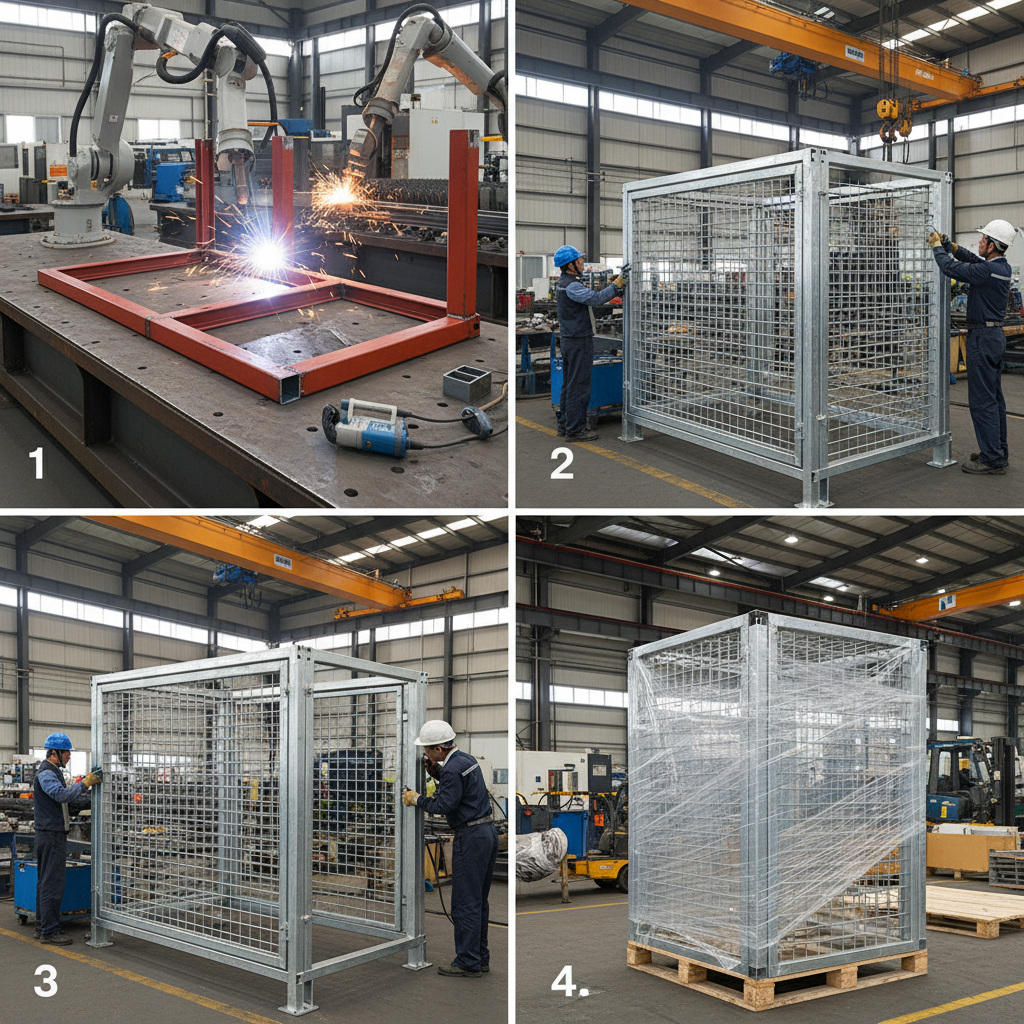

High Security 358 Anti Climb Cheap Welded Wire Fence Systems
Securing high-value assets requires a balance between rigorous physical resistance and cost-efficiency. For facility managers and security engineers, the search for a cheap welded wire fence often leads to a compromise in quality, yet the 358 high-security system proves that professional-grade protection can remain economically viable. This specialized barrier is engineered specifically to prevent unauthorized access by eliminating finger-holds and resisting manual cutting tools.
Unlike standard perimeter solutions, the 358 system utilizes a tight mesh aperture and heavy-duty carbon steel wires to create a formidable psychological and physical deterrent. Whether protecting an electrical substation, an airport perimeter, or a psychiatric hospital, the integration of precise welding and advanced surface treatments ensures longevity in harsh environments. By understanding the technical specifications and application logic of these systems, procurement officers can secure their premises without overspending on unnecessary over-engineering.

The Engineering Logic Behind Anti-Climb Mesh Technology
The 358 security system is not a traditional fence; it is a precision-engineered barrier. The nomenclature "358" refers to its specific design characteristics: 3" x 0.5" x 8 gauge (approximate), which creates a mesh so tight that it is virtually impossible to get a toe-hold or finger-grip. This design fundamentally alters the climber's ability to scale the wall, effectively neutralizing the most common method of breach.
From a materials science perspective, the use of high-quality carbon steel ensures that the structure maintains its rigidity under pressure. The welding process is critical; each intersection must be fused strongly to prevent the mesh from being peeled away from the posts. To enhance this, the system often incorporates flat bars and specialized metal clips that distribute stress evenly across the panel, ensuring that the barrier does not sag or warp over time.
Furthermore, the choice of wire thickness—ranging from 3.0mm to 5.0mm—allows engineers to scale the security level based on the risk profile of the site. A 5.0mm wire provides significantly more resistance against hydraulic cutters compared to standard perimeter fencing, making it an ideal choice for high-risk zones like prisons or military installations.

Advanced Surface Treatments for Long-Term Environmental Resistance
Corrosion is the primary enemy of any metal barrier. To prevent oxidation and structural failure, the 358 system employs several industrial-grade surface treatments. The most common approach is hot-dipped galvanization, where the steel is submerged in molten zinc, creating a metallurgical bond that protects the inner core from moisture and salt air. For extreme environments, a PVC coating is added over the galvanization, providing an extra layer of insulation and aesthetic flexibility.
In urban or commercial settings, powder coating is often applied after galvanization. This process not only allows for specific color matching to blend with the architecture but also adds a hard, scratch-resistant finish. The choice between electro-galvanized and hot-dipped galvanized depends entirely on the exposure levels; hot-dipped is far superior for outdoor, coastal, or industrial areas where chemical exposure is frequent.
By selecting the appropriate coating, buyers can significantly reduce the total cost of ownership. A well-treated fence requires minimal maintenance over its lifespan, eliminating the need for frequent repainting or section replacements, which is a key factor when evaluating a cheap welded wire fence strategy focused on long-term value rather than just initial purchase price.
Strategic Application Scenarios for High-Security Barriers
The versatility of the 358 system makes it suitable for a wide array of critical infrastructure projects. In the transportation sector, it is frequently utilized for airport security fencing and shipping port boundaries, where the goal is to prevent unauthorized personnel from entering sterile zones. Its anti-cut properties make it equally effective for walkway security and bridge guarding, where falling hazards must be mitigated while preventing intentional intrusion.
In the energy and utility sector, the system is a standard for electrical sub-station fencing and water treatment works. These sites often house dangerous equipment or critical resources that require 24/7 protection. The tight mesh prevents the insertion of tools or foreign objects through the fence, adding a layer of safety for both the facility and the public.
Commercial and institutional applications also benefit from this technology. Psychiatric hospitals and prisons utilize 358 mesh to ensure patient and inmate security without compromising visibility. Because the mesh is transparent yet impenetrable, security personnel can maintain a clear line of sight across the perimeter, allowing for rapid detection of suspicious activity while maintaining a secure enclosure.
Technical Specifications and Configuration Guide
| Feature Aspect | Standard Range | Security Level | Recommended Use |
|---|---|---|---|
| Wire Thickness | 3.0mm - 5.0mm | Medium to High | Industrial Perimeters |
| Mesh Aperture | 76.2 x 12.7mm | Ultra-High | Anti-Climb / Anti-Cut |
| Panel Height | 1000mm - 2000mm | Variable | Custom Site Requirements |
| Post Type | 60x60mm / 80x80mm | Structural | High Wind / Heavy Load |
| Surface Finish | Hot-Dip Galv / PVC | Corrosion Resistant | Coastal & Outdoor Areas |
Evaluating Supplier Capability for Security Infrastructure
When procuring high-security fencing, the manufacturer's technical force is as important as the product specifications. A professional supplier must possess comprehensive quality management systems, such as ISO-9001, to ensure that every weld is consistent and every coating meets thickness standards. Without these certifications, the integrity of the "anti-cut" claim can be compromised by weak weld points.
Customization capability is another critical factor. Since every site has unique topography and security needs, the ability to provide OEM and ODM services—adjusting panel widths (from 2000mm to 2500mm) and post heights (up to 2500mm)—is essential. A supplier who integrates production, sales, and installation can provide a seamless transition from the design phase to the final physical barrier, reducing the risk of installation errors that could create security gaps.
Furthermore, the use of advanced process equipment and complete inspection methods ensures that the carbon steel wires meet the required tensile strength. For international buyers in regions like Australia, Canada, or Saudi Arabia, the manufacturer's experience in exporting and their adherence to global safety standards (like OHSAS18001) provides the necessary assurance of product reliability and ethical manufacturing.
Procurement Strategy for Budget-Conscious Security Projects
Achieving a cost-effective security perimeter does not mean selecting the lowest bid, but rather optimizing the specification to the actual risk. For instance, if a site is not in a corrosive coastal environment, electro-galvanized wire may be sufficient, reducing costs without sacrificing the anti-climb geometry of the mesh. Conversely, investing in a 5.0mm wire in high-risk zones prevents costly breaches and potential liability.
Buyers should focus on the "Life Cycle Cost" rather than the initial invoice. A lower-priced alternative that uses inferior galvanization will result in rust within a few years, requiring total replacement. By specifying hot-dipped galvanized wire with an optional powder coat, the facility extends the product's life by decades, making it a truly economical choice over the long term.
Lastly, consolidating the order to include matching gates and fitting accessories (such as flat bars and metal clips) from the same manufacturer ensures a tight fit and consistent finish. This prevents the "weak link" phenomenon where a high-security fence is undermined by a poorly constructed gate or loose fittings, ensuring the entire perimeter functions as a single, cohesive security unit.
Common Questions Regarding 358 Security Fencing
What makes the 358 system "anti-climb" compared to standard welded wire?
The 358 system uses an extremely small aperture (76.2mm x 12.7mm) that prevents humans from getting a grip with their fingers or toes. Standard fences have larger holes that provide easy footholds, whereas the 358 design leaves no space for climbing leverage.
Can these security panels be customized for specific site dimensions?
Yes, the system is highly customizable. Panel widths typically range from 2000mm to 2500mm, and heights vary from 1000mm to 2000mm. Posts can also be adjusted in height from 1400mm to 2500mm to suit the specific security needs of the project.
Which surface treatment is best for coastal areas with high salt spray?
For coastal environments, hot-dipped galvanized wire combined with a PVC coating is highly recommended. This provides a dual layer of protection that prevents salt-induced corrosion and extends the service life of the barrier significantly.
Is the 358 mesh effective against manual cutting tools?
Yes, because of the high-quality carbon steel and the tight spacing of the wires, it is much more difficult to use standard bolt cutters. The small gaps leave very little room to position cutting tools, thereby increasing the time and effort required for a breach.
What are the typical applications for this type of high-security mesh?
It is primarily used for high-risk perimeters including airports, electrical sub-stations, prisons, psychiatric hospitals, and industrial machine guards where preventing unauthorized access is a critical safety requirement.
How does the installation process differ from traditional fencing?
The 358 system uses specialized flat bars and metal clips to secure the panels to square posts (60x60mm or 80x80mm). This creates a more rigid and secure connection than traditional ties, ensuring the mesh cannot be pried away from the support structure.
Technical References and Industry Resources
- Overview of Perimeter Fencing Systems - Wikipedia
- ISO Quality Management Standards for Steel Fabrication
- ASTM International Standards for Galvanized Steel Wire
- Health and Safety Guidelines for Industrial Site Guarding
Selecting the right security barrier requires a detailed analysis of risk, environment, and budget. By focusing on technical specifications like wire gauge and coating quality, you can implement a professional perimeter that ensures long-term safety and asset protection.
Related Articles